
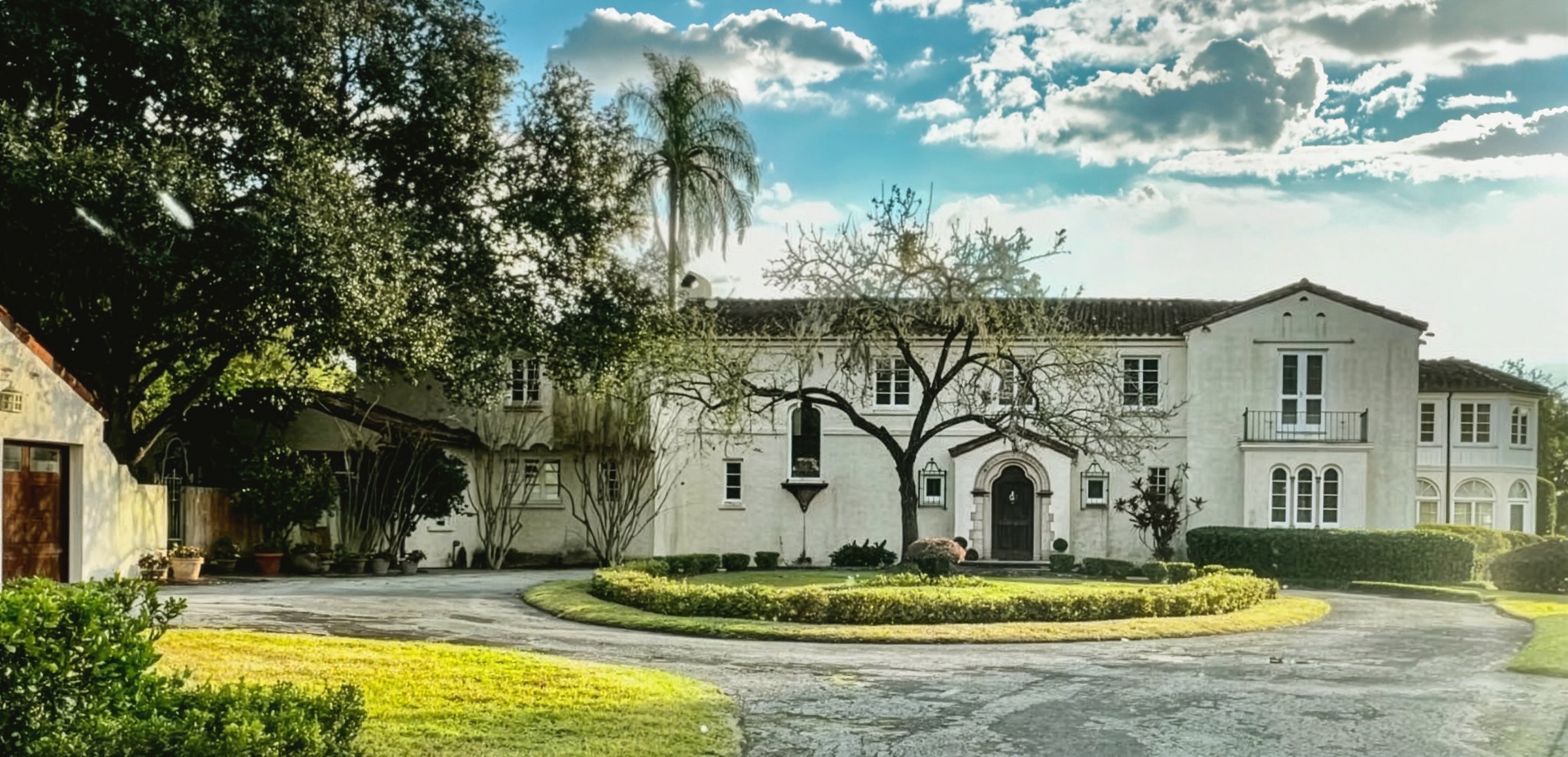
Merrywood at a Crossroads
The Friends of Casa Feliz is working to identify a qualified purchaser for Merrywood, the historic Caroline Griggs Plant House on Lake Osceola. Our goal is to connect this architecturally significant property with individuals who have both the means and interest to restore and steward it. As part of this effort, the contracted buyer has expressed interest in partnering with a prospective purchaser to explore potential solutions with the City of Winter Park—including the possibility of a lot split—that could support preservation of the house. Information about the property and opportunities to view the house will be shared with prospective buyers through this page. Serious inquiries only.
Expression of Interest
Friends of Casa Feliz is assisting in connecting the property with individuals who may have interest in purchasing and restoring the house. Prospective buyers who wish to learn more are invited to complete the Interest Form linked below. Additional information about the property and opportunities to view the house will be shared with qualified inquiries.
For specific questions, please contact Betsy Owens, Executive Director at Casa Feliz, at betsy@casafeliz.us.
The Caroline Griggs Plant House
Merrywood, also known as the Caroline Griggs Plant House, is a historic residence located at 1020 Palmer Avenue in Winter Park, Florida, overlooking Lake Osceola. The house was completed in 1939 and designed by the architect James Gamble Rogers II, one of the most influential architects associated with the development of Winter Park’s residential architecture.
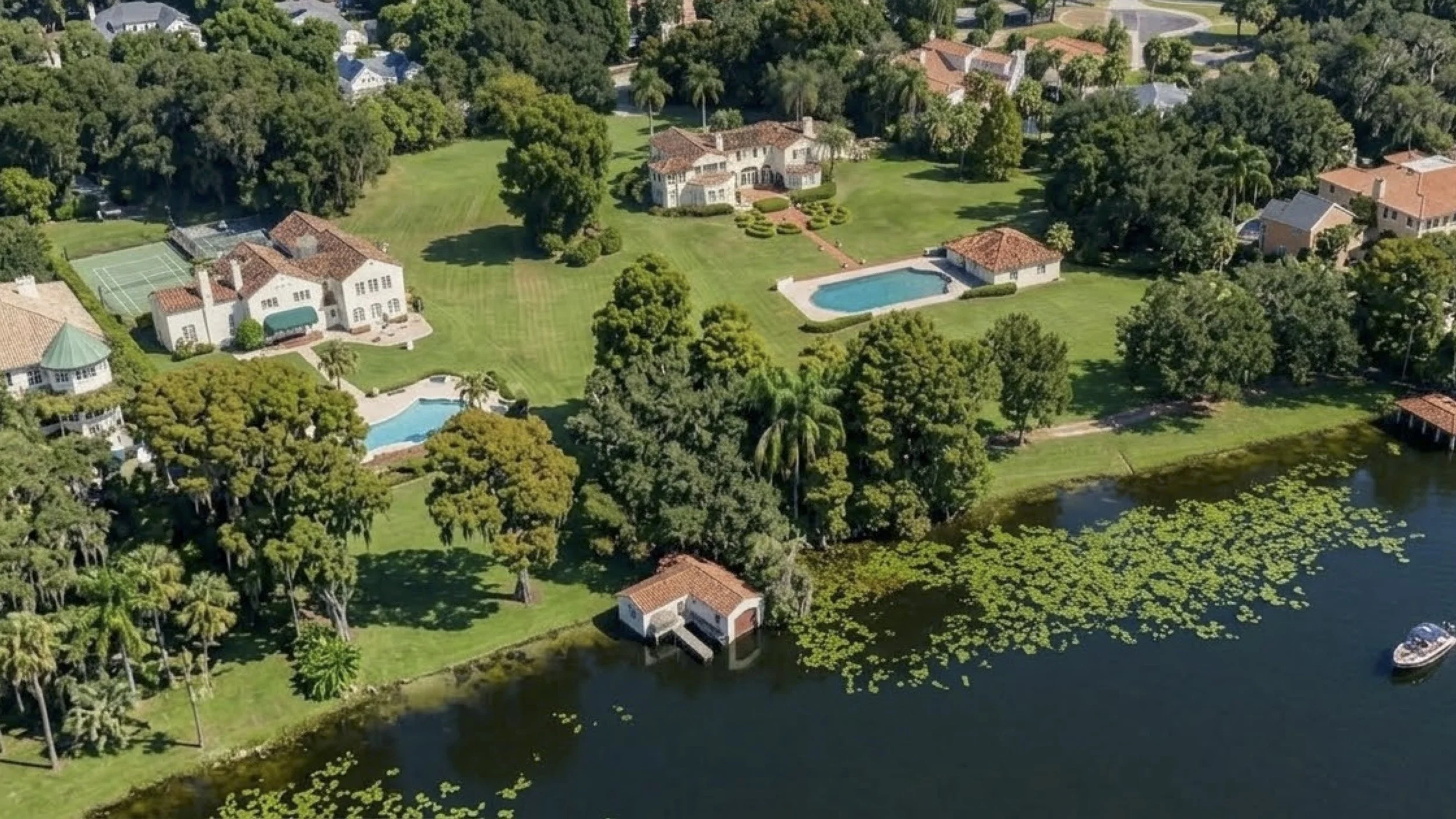
The house contains approximately 7,300 square feet, with five bedrooms and seven bathrooms, and sits on approximately 4 acres between Palmer Avenue and Lake Osceola.
Architectural Description
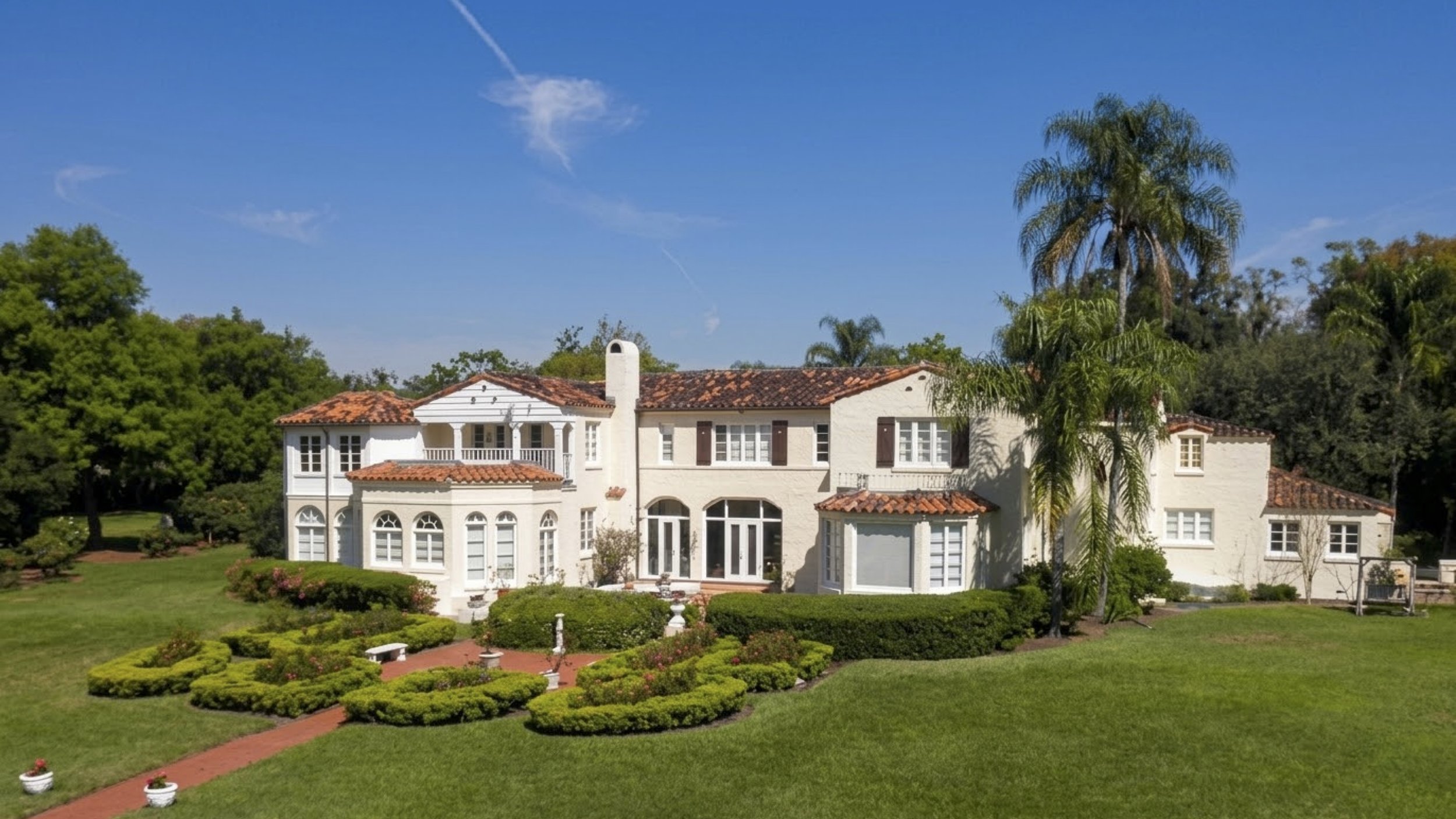
Merrywood is a two-story stucco residence designed in the Spanish Eclectic / Mediterranean Revival tradition. The central portion of the house is covered by a side-facing gable roof, with additional cross gables and varied roof heights used to break down the scale of the long lakeside façade.
The building extends more than 125 feet along the lake, making it one of the larger historic residences on the Winter Park chain of lakes.
The organization of the house reflects Rogers’ interest in creating connections between interior spaces and the surrounding landscape. Along the lakeside façade, nearly every room was designed with views toward the courtyard and Lake Osceola.
-
A central entrance hall approximately 45 feet in length
A sequence of reception and living rooms opening toward the lake
Triple-arched openings leading to a loggia and terrace
A sunken patio and courtyard located between the house and the lake
Exquisite custom tile flooring in principal public rooms and oak floors in bedrooms
Extensive built-in cabinetry and bookshelves
Decorative plaster arches and wrought-iron railings
The outdoor spaces—including terraces, balconies, planters, and retaining walls—were designed so that the house appears to descend gradually toward the lake.
-
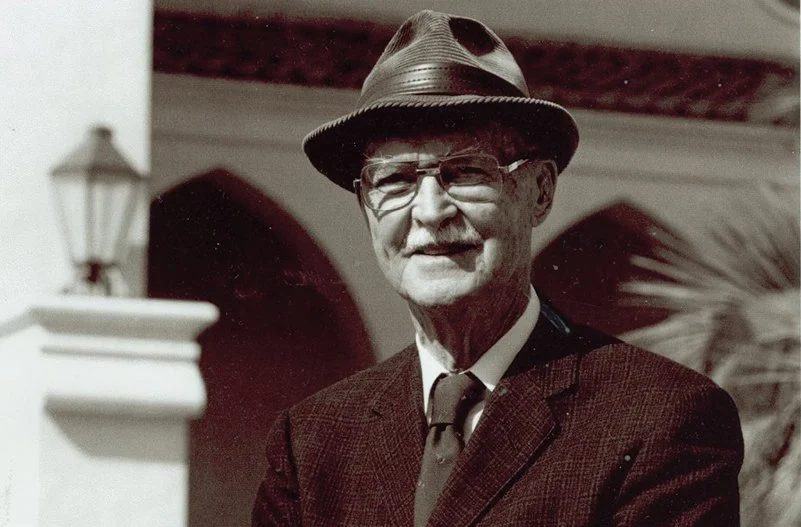
James Gamble Rogers II (1901–1990) was one of the most important architects working in Winter Park during the twentieth century. Born in Chicago into a family of architects, he later moved to Florida and opened a practice in Winter Park in 1928, establishing his own firm in 1935. He is the nephew of architect James Gamble Rogers I, designer of many of the buildings at Yale, Columbia and Northwestern Universities.
Rogers designed numerous houses and institutional buildings in Winter Park and throughout Central Florida. His work is known for its careful attention to scale, materials, and traditional architectural forms, often drawing from Spanish Revival, Mediterranean Revival, French Provincial, and Colonial Revival styles.
Among his most recognized projects are:
Casa Feliz Historic Home Museum (the Barbour House)
Greeneda Court shops on Park Avenue
Multiple buildings on the campus of Rollins College
The Florida Supreme Court Building in Tallahassee
Over the course of his career, Rogers’ work helped shape the architectural character of Winter Park and the surrounding region.
Merrywood is notable as the largest residence Rogers designed.
-
The property lies within one of the historic residential areas surrounding the Winter Park chain of lakes. The area developed primarily in the early twentieth century as Winter Park attracted seasonal residents and permanent homeowners drawn to its lakes, gardens, and architecture.
The house occupies a long parcel extending from Palmer Avenue to the shore of Lake Osceola, with the primary living spaces oriented toward the lake.
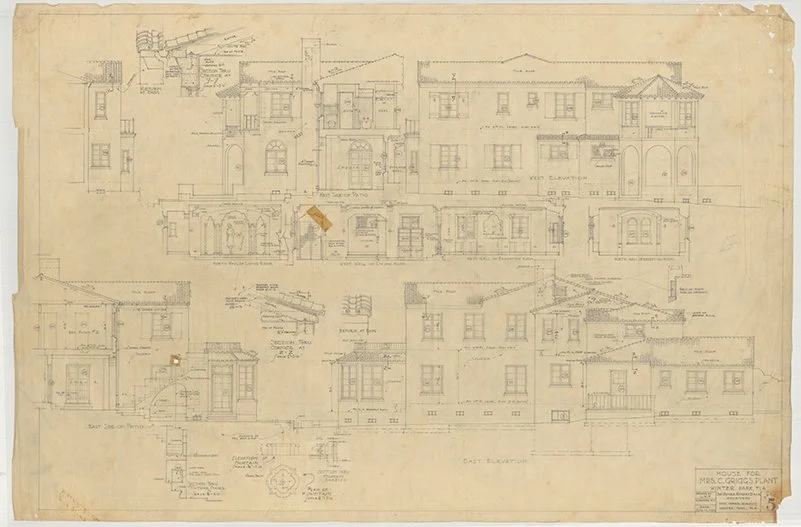
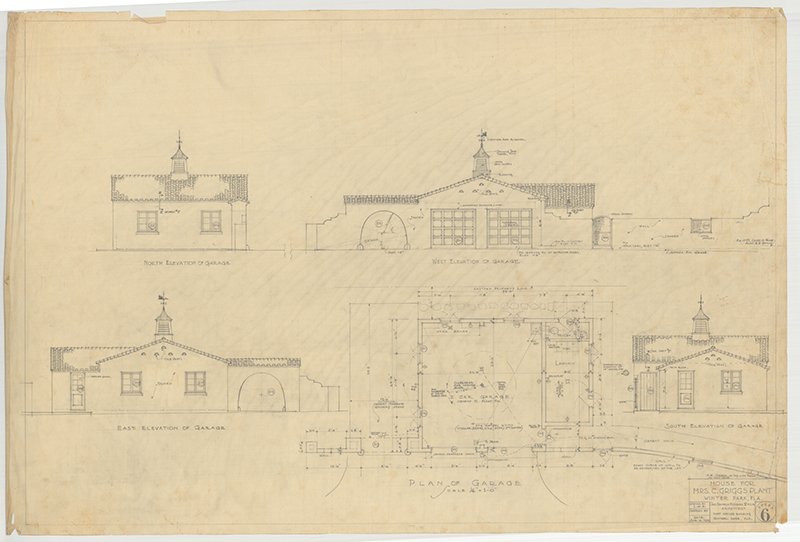
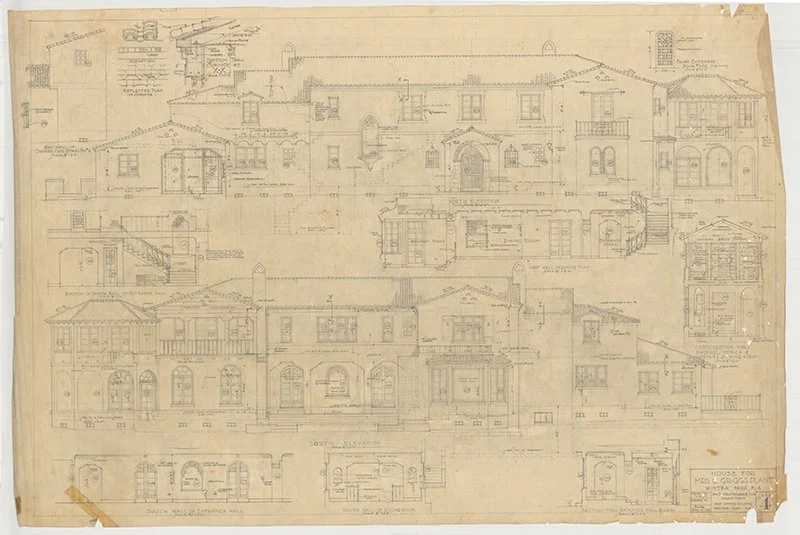
Original hand-drawn renderings of Merrywood by James Gamble Rogers II
Merrywood in the News & other Links
-
So Far, No Response to Matt Morgan's Offer for Merrywood
July 27, 2026 | Winter Park Voice
Matt Morgan, who increased his offer this month from $10 million to $12 million for Merrywood, says he has not received any response from the sellers.
That means the future of the nearly 90-year-old estate designed by James Gamble Rogers II remains in limbo as an August vote nears for the City Commission to decide if the current buyer with a contract on the property will be allowed to split the large lot on Lake Osceola in two. Winter Park’s land development rules generally prohibit subdividing lakefront lots so Tara Tedrow, the buyer with the contract, is seeking special permission.
Morgan told the Voice he has not heard back since putting his offer in writing more than two weeks ago.
-
An exclusive look inside Winter Park’s historic, imperiled Merrywood House
July 11, 2026 | Orlando Sentinel
There’s a contentious debate underway in Winter Park: Is an almost 90-year-old mansion built by the city’s premier architect, James Gamble Rogers II, worth saving?
But even as its owners warn they may demolish it later this year, few have gotten a peek inside the 7,300-square-foot house along Lake Osceola, where the answer may lie.
The Orlando Sentinel explored the 3.67-acre estate last week in a visit arranged by Mick Night of Premier Sotheby’s International Realty. Night has worked about a year with the owners to try to find a buyer interested in preserving the house, one of only 30 or so homes Rogers designed that remain standing in Winter Park.
-
Matt Morgan Offered $10 Million for Merrywood
July 6, 2026 | Winter Park Voice
Matt Morgan, the Morgan & Morgan attorney who lives in a home on Winter Park’s Historic Register, said he made a verbal offer of $10 million last year to purchase the entire Merrywood lot and reinitiated the offer last week with, he said, the intention of preserving the nearly 90-year-old estate that is significant because of its age and as the largest and most ornate home built by architect James Gamble Rogers II.
Morgan’s original offer wasn’t included in the information provided to the City Commission before the elected board took its first vote June 24 on the fate of property. The commission voted 3-2 (commissioners Elizabeth Ingram and Warren Lindsey dissented) for a change to the land development plan that would allow for the 3.67-acre lot to be split in two without requiring a condition recommended by city staff that the existing home be placed on the city’s historic register.
-
Winter Park trying to save more of its historic homes from wrecking ball
June 18, 2026 | Orlando Sentinel
The city of Winter Park touts itself as a community with unique character, due in large part to its historic architecture. But some residents are worried builders and bulldozers are chipping away at its past, one home at a time.
Among the endangered buildings are works by the city’s most-famous architect, James Gamble Rogers II. The owners of homes he designed at 1020 Palmer Avenue (the Merrywood House built in 1939) and 250 Virginia Drive (also 1939) have filed for city permits to demolish them, although it’s unclear when they would be razed.
-
Winter Park residents push for historic home protections
May 13, 2026 | WESH-TV
Residents in Winter Park are advocating for stronger protections for the city’s historic homes, including three designed by renowned architect James Gamble Rogers that are at risk of demolition. Public comment at the Winter Park City Commission meeting was filled with passionate pleas to preserve the city’s historic homes.
-
Historic Home in Winter Park Faces Demolition
March 26, 2026 | WESH-TV
A 1939 lakefront estate in Winter Park designed by James Gamble Rogers II faces imminent demolition after a permit filing triggered a short countdown, despite its architectural significance. Preservation advocates are racing to secure a buyer and pursue a lot-split solution that could save the home before its scheduled demolition date.
-
Merrywood at a Crossroads
March 26, 2026 | FOX 35
Our executive director, Betsy Owens, sat down with Amy Kaufeldt of Good Morning Orlando, to discuss Casa Feliz's efforts to save its sister property, Merrywood, from demolition. A demolition permit has been filed for the 1939 James Gamble Rogers II - designed home, and unless a buyer comes forward, the historic property will be lost.
-
Historic home built by Winter Park’s most famous architect could be demolished
March 25, 2026 | Camila Gomez
Community members hope history will repeat itself as they fight to save the Merrywood House, much like they successfully did for Casa Feliz over two decades ago.
A historic Winter Park home on Lake Osceola built by the city’s most-famous architect could be demolished soon, unless there’s a buyer who wants to preserve the nearly 70-year-old house and is willing to navigate a complicated combination of city rules and residents’ interests.
-
Demolition clock starts on Merrywood as preservation push builds
March 12, 2026 | By Beth Kassab
The clock is ticking on the fate of Merrywood.
The sprawling Winter Park estate — among the largest and most ornate homes designed by architect James Gamble Rogers II — could be demolished in as soon as 90 days unless preservationists can find a buyer willing to save it.
-
Future of Historic Merrywood in Question as Demolition Filing Triggers 90-Day Review
March 6, 2026 | Board of Directors, Friends of Casa Feliz
Preserving historic places is how a city honors its past while shaping its future. Today, Winter Park has an opportunity to truly live up to its designation as The City of Culture and Heritage by preserving the Caroline Griggs Plant House—more commonly known as Merrywood—at 1020 Palmer Avenue, one of the city’s most significant architectural treasures.
-
Lot Split Request Puts Future of Gamble Rogers Estate in Question
February 7, 2026 | By Beth Kassab
The fate of 1020 Palmer Avenue — a once-grand home and among the largest and most ornate ever designed by James Gamble Rogers II (think velvet-covered handrails) and known in recent years as “Merrywood” — appears to hinge on whether a unicorn buyer emerges to save the property.
Such a feat would take not only millions of dollars, but also approval from city officials to break one of Winter Park’s cardinal development rules: No lakefront lot splits allowed.
-
10 Homes That Matter
June 4, 2015 | Randy Noles
James Gamble Rogers II designed this Spanish eclectic-style house, which was built in 1938 for New Englander Caroline Plant, who named it Merrywood. At nearly 7,000 square feet, it’s the largest residence ever designed by Rogers. But, apart from its size, Merrywood is typical of the architect’s work, with its buff-colored stucco exterior and red tile roof. When Plant died, the house was sold and her estate was distributed to Rollins College and other charitable organizations. Merrywood was later bought by George S. Marsh, who hired Rogers to design modifications and additions. However, the architect said in the 1980s that a two-story extension at the house’s western end, which features round-headed windows on the first story, was not part of his plan.